Dessie's Hummingbird-Calling Garden Feeder
Dessie's Hummingbird-Calling Garden Feeder
🐝 Gives wild bees a safe nesting home
🌸 3× more pollination than honeybees
🪵 Solid, untreated cedar — built to last
☔ Copper roof keeps tunnels dry
🌿 Chemical-free, natural materials only
Couldn't load pickup availability

Dessie's Hummingbird-Calling Garden Feeder
Painted by hand in an old net shed on Mobile Bay
Dessie Broussard, 72, has made hummingbird feeders in Fairhope, Alabama since 1991. Arthritis in both thumbs now stops her from shaping the flower petals — this is her final batch.
“My first plastic feeder faded to pink in three weeks, and the hummingbirds stopped coming. So I made one they could find — a little painted pot with a red flower, right down among the salvia. On the second morning, the first one drank from it.”
Dessie Broussard · Fairhope, Alabama
What comes in the box
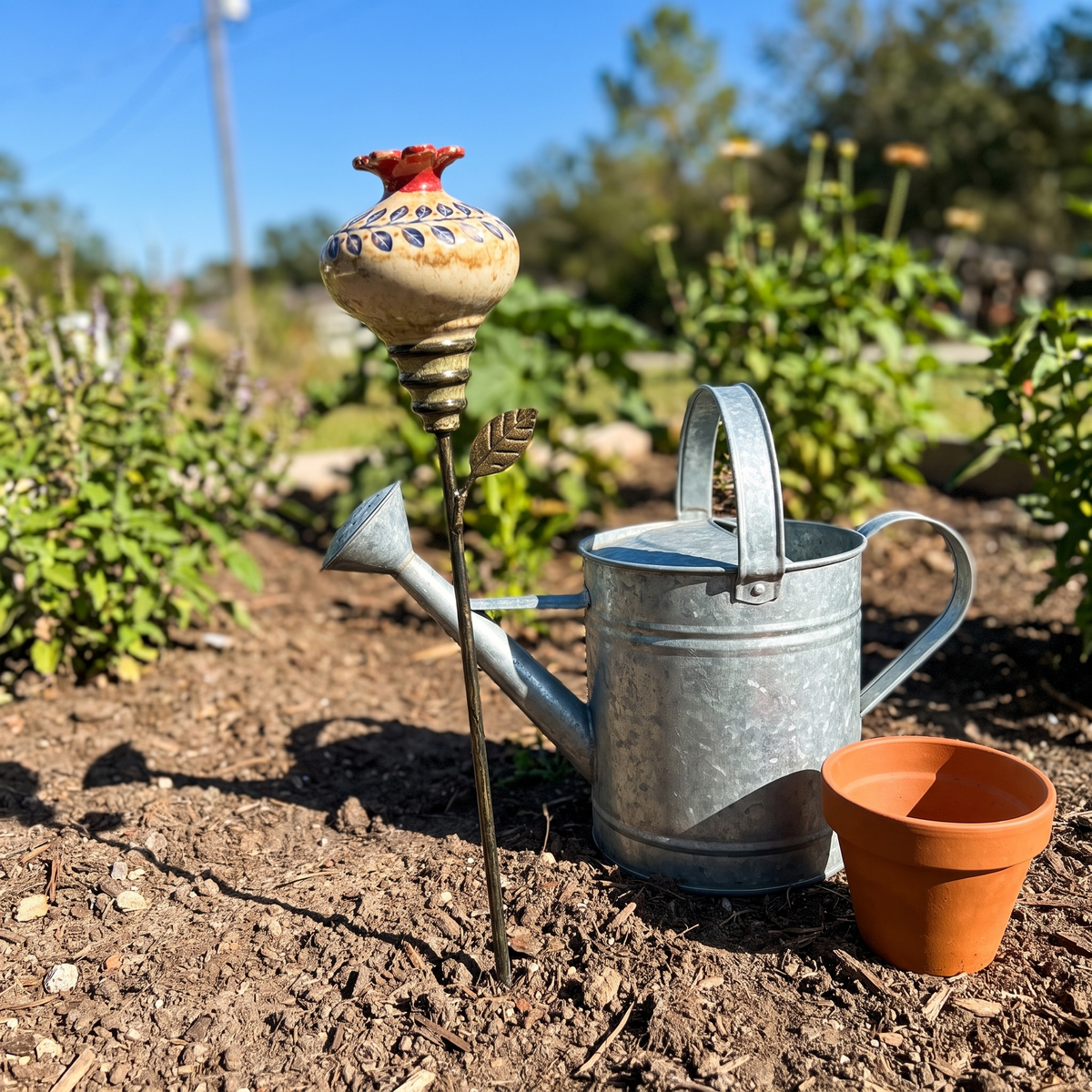
Blue leaf vine, red flower opening
Bronze finish with a metal leaf
The signal hummingbirds look for
Push it into the soil — no hanging, no tools
Six details the hummingbirds taught her
At 24 inches, the feeder stands right among your flowers — exactly where hummingbirds search all day. They find it on their first pass.
Hummingbirds fly to red. The red flower on top is the signal, so your nectar needs no red dye — just sugar and water.
Holds a few days of nectar, not a whole week. Big jugs go cloudy before they are empty. Small means fresh.
A glazed, hand-painted finish that keeps its colour in the sun. No faded pink after three weeks like plastic.
A band of blue leaves around every pot — Dessie’s signature pattern since 1991.
A bronze-finish metal stem with a single leaf. Stands firm in a flower bed or porch planter and looks like it grew there.
“Most feeders are hung where it suits people — by the window, under the roof. Dessie puts hers where it suits the bird, right among the flowers, and keeps them small so the nectar stays fresh. In the fall, before the long flight over the Gulf, that matters a great deal. These birds have no time to waste.”
Dr. Lynn Hargrove · Retired biology professor · Hummingbird bander on the Gulf Coast for 22 years
Perfect for
Why Dessie’s feeders work
- Right where they look. Among the flowers, not up under the roof where hummingbirds rarely search.
- Colour that stays. A glazed finish that doesn’t fade to pink in the summer sun.
- Fresh nectar, always. A small pot you refill every few days — the way hummingbirds like it.
- One design since 1991. Around 4,000 made, every one with the same blue leaf vine.
- Proven in her own garden. 34 Octobers of counting — 212 hummingbird visits on her busiest day.
If it isn’t right for your garden, one email to info@cedarandtinco.com is enough. No forms, no questions — Dessie would rather have it back than have it sit in a closet.
Dessie’s one request. Mix 1 part white sugar with 4 parts water — no honey, no red dye. Push the stake into a sunny bed near red or orange flowers, and change the nectar every 2 to 3 days in warm weather. Each pot is painted by hand, so the leaves vary a little from piece to piece.
Product details
| Contents | 1 hummingbird feeder garden stake (pot + metal stake) |
| Finish | Glazed, hand-painted pot with crackle finish · blue leaf vine · red flower opening |
| Stake | Metal, bronze finish, with a decorative metal leaf |
| Dimensions | Approx. 24 in tall × 4 in wide × 4 in deep (61 × 10 × 10 cm) |
| Placement | Flower beds, borders, porch planters — anywhere the stake can go into soil |
| Nectar | 1 part white sugar, 4 parts water. No honey, no dye. |
| Care | Rinse with warm water at every refill. Bring inside during hard freezes. |
| Best for | Ruby-throated, Anna’s, Rufous and Black-chinned hummingbirds |
| Made by | Dessie Broussard, Fairhope, Alabama — final batch, 241 remaining |